Aluminium has become one of the most important engineering materials in modern industries due to its lightweight structure, corrosion resistance, and high strength-to-weight ratio. Among its various forms, standard aluminium extrusions are widely used because they offer consistency, durability, and cost efficiency in large-scale production. These extrusions are created by forcing heated aluminium billets through a shaped die, resulting in uniform cross-sectional profiles that can be used across multiple applications.
With increasing demand for modular design, energy efficiency, and sustainable materials, standard aluminium extrusion profiles have become a backbone of industries such as construction, transportation, automation, and energy systems.
Understanding Standard Aluminium Profiles
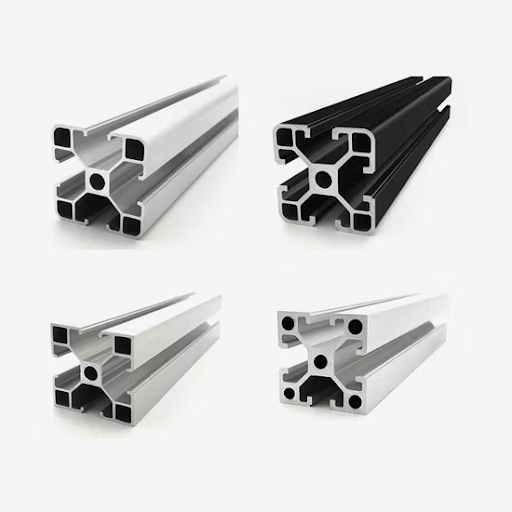
Standard aluminium profiles refer to pre-engineered aluminium profiles that follow widely accepted industrial shapes and dimensions. These include basic structural forms such as angles, channels, tubes, bars, and beams. Because they are standardized, they eliminate the need for custom tooling in many applications, making production faster and more economical.
The uniformity of standard aluminium extrusion profiles ensures consistent mechanical properties, dimensional accuracy, and surface finish. This makes them highly reliable for both structural frameworks and precision-based industrial components.
Manufacturing Process of Aluminium Extrusions
The production of standard aluminium profiles begins with heating aluminium billets to a malleable temperature. These billets are then pushed through a steel die using high pressure, forming the desired profile shape. Once extruded, the profiles are cooled, stretched for straightness, and cut into required lengths.
Further processes such as anodizing, powder coating, or mechanical finishing may be applied to enhance durability and appearance. The result is a versatile product line of standard aluminium extrusion profiles suitable for a wide range of industrial uses.
Key Features of Standard Aluminium Profiles
The popularity of standard aluminium profiles comes from their exceptional physical and mechanical properties:
- Lightweight yet strong structure suitable for load-bearing applications
- Excellent resistance to corrosion in harsh environments
- High thermal and electrical conductivity
- Easy machinability for cutting, drilling, and assembling
- Environmentally friendly and fully recyclable material
These features make standard aluminium extrusion profiles an ideal choice for industries requiring efficiency, durability, and sustainability.
Types of Standard Aluminium Extrusion Profiles
There are several commonly used types of standard aluminium profiles, each designed for specific applications:
- Square and rectangular hollow sections are used in framing systems
- L-shaped angle profiles used for reinforcement and support
- U-channels used in guiding and structural applications
- I-beam profiles used for heavy load-bearing structures
- Flat bars used in connectors, brackets, and supports
These standard aluminium extrusion profiles are widely available and can be easily integrated into modular systems, making them highly versatile across industries.
Industrial Applications of Standard Aluminium Extrusions
Construction and Infrastructure
One of the largest applications of standard aluminium extrusions is in the construction industry. They are used in window frames, curtain walls, roofing systems, partitions, and façade structures. Their corrosion resistance makes them suitable for both indoor and outdoor applications, even in extreme weather conditions.
In modern architecture, standard aluminium extrusion profiles help create lightweight yet strong structures that enhance design flexibility while reducing overall building weight.
Transportation and Automotive Industry
The automotive and transportation sectors heavily rely on aluminium extrusion technology to reduce vehicle weight and improve fuel efficiency. Standard aluminium profiles are used in chassis components, structural reinforcements, roof rails, and crash management systems.
By reducing weight without compromising strength, standard aluminium extrusion profiles contribute to improved vehicle performance, lower emissions, and better energy efficiency.
Industrial Machinery and Automation
Manufacturing and automation industries depend on modular and adaptable systems. Standard aluminium profiles are widely used in machine frames, conveyor systems, robotic enclosures, and workstations.
Their modular design allows easy assembly and modification, which helps industries reduce downtime and improve operational efficiency. Standard aluminium extrusion profiles are especially valued in automated production environments where flexibility is essential.
Electrical and Electronics Applications
Aluminium’s excellent thermal conductivity makes it ideal for electronics and electrical systems. Standard aluminium profiles are used in heat sinks, LED lighting housings, control cabinets, and electronic enclosures.
These profiles help dissipate heat effectively, improving performance and extending the lifespan of electronic components. As a result, standard aluminum extrusion profiles play a critical role in modern electronic systems.
Renewable Energy Sector
The renewable energy industry, particularly solar and wind power, makes extensive use of standard aluminium profiles. They are commonly used in solar panel mounting structures, inverter housings, and wind turbine components.
Their lightweight nature and resistance to corrosion ensure long-term performance in outdoor environments. This makes standard aluminium extrusion profiles a sustainable choice for green energy infrastructure.
Advantages of Standard Aluminium Profiles in Industry
The widespread adoption of standard aluminium profiles is driven by several advantages:
- Reduced manufacturing costs due to standardized production
- Faster project execution and reduced lead times
- High structural strength with low weight
- Minimal maintenance requirements over long-term use
- Compatibility with modular and scalable designs
These benefits make standard aluminium extrusion profiles a preferred material in engineering and industrial applications where performance and cost efficiency are equally important.
Design Flexibility and Customization Options
Although they are standardized, standard aluminium profiles offer significant flexibility in design and application. They can be easily cut, drilled, welded, or combined with other materials to meet specific project requirements.
Surface treatments such as anodizing or powder coating further enhance corrosion resistance and aesthetic appeal. This adaptability allows standard aluminium extrusion profiles to be used in both functional and decorative applications.
Sustainability and Environmental Benefits
Sustainability is one of the strongest advantages of aluminium as a material. Standard aluminium profiles are fully recyclable without loss of quality, making them an environmentally responsible choice for industries focused on reducing carbon footprints.
The recycling process consumes significantly less energy compared to primary aluminium production. This makes standard aluminium extrusion profiles a key contributor to sustainable manufacturing practices and green building initiatives.
Conclusion
Standard aluminium extrusions have become a fundamental component of modern industrial and engineering applications. Their combination of strength, lightweight structure, corrosion resistance, and sustainability makes them highly valuable across multiple sectors. From construction and transportation to electronics and renewable energy, these profiles support innovation and efficiency in every field.
Leading aluminium extrusion manufacturer offering precision-engineered industrial solutions, JM Aluminium delivers high-quality aluminium extrusion solutions designed for diverse industrial applications, including construction, automotive, and engineering sectors. With advanced manufacturing facilities and precision engineering capabilities, they offer standard and customized extrusion profiles that ensure strength, durability, and dimensional accuracy. Their services include design support, surface finishing, and bulk production with strict quality control and reliable performance standards.