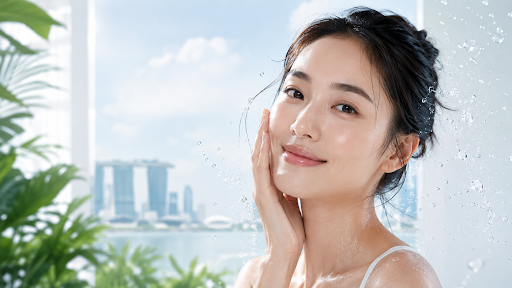
Your face can look shiny in the morning but feel tight or rough by lunchtime. That is a common pain point in Singapore, where heat, sweat, sun, and hours in air-conditioned rooms can affect how your skin feels. The fix is simple: learn how to hydrate skin with gentle cleansing, water-binding ingredients, moisturizer, and sun protection.
Good skin hydration is not about using the heaviest cream you can find. It is about helping your skin attract water and hold on to it without feeling sticky.
Why Skin Can Feel Dry in Humid Singapore
Singapore has a warm, humid climate throughout the year. Humidity may make the air feel moist, but it does not guarantee comfortable skin. Long days in air-conditioned offices, malls, cars, and bedrooms can expose your face to drier indoor air. Frequent washing, hot showers, strong cleansers, and too much exfoliation can also weaken the skin barrier. Singapore’s National Environment Agency describes the country as warm and humid, while dermatologists note that low-humidity settings can contribute to moisture loss.
If you search “dehydrated skin Singapore,” you may wonder how skin can lack water in such a muggy place. Your routine, indoor environment, and skin barrier matter too.
Common Signs Your Skin Needs More Water
Skin that lacks water does not always look flaky. It may produce extra oil, which makes the problem easy to miss. Watch for:
- Tightness after cleansing
- Dull or tired-looking skin
- Fine lines that look more visible
- Rough or uneven texture
- Patchy makeup
- Oiliness with dry-feeling cheeks
- Sensitivity or mild stinging
Dryness can also cause roughness, flaking, itching, or cracking. If symptoms are severe, painful, persistent, or linked with a rash, speak with a doctor or dermatologist.
How to Hydrate Skin Without Feeling Greasy
A good routine does not need ten steps. Keep it basic and consistent.
- Use a gentle cleanser. Wash with lukewarm water, not steaming-hot water.
- Apply hydration to damp skin. A light serum or essence with hyaluronic acid can support a moisture-focused routine for many skin types.
- Seal it in with moisturizer. Gel creams may suit oily or combination skin. Richer creams can help skin that feels rough or tight. Dermatologists advise choosing a texture that suits your skin type.
- Use sunscreen every morning. Pick a broad-spectrum, water-resistant SPF 30 or higher. Reapply after swimming, heavy sweating, or long periods outdoors.
- Be gentle after sweating. Pat sweat away instead of rubbing. Cleanse when needed, then reapply moisturizer and sunscreen.
The concern behind “dehydrated skin Singapore” often comes down to balance. You need enough moisture for comfort, but not so many heavy layers that your face feels slick in the heat.
Ingredients That Help Skin Hold Water
Product labels can feel like alphabet soup, but a few ingredient groups are useful.
Hyaluronic acid is known for its moisturizing qualities. Ceramides can support hydration, while emollients help keep skin soft and smooth. Occlusive formulas can also reduce water loss, although very heavy textures may feel uncomfortable in Singapore’s climate.
Introduce one product at a time and patch-test it first, especially if your skin is sensitive.
Habits That Can Make the Problem Worse
Even a good moisturizer cannot fully offset a harsh routine. Avoid:
- Scrubbing your face every day
- Using exfoliating acids too often
- Washing with very hot water
- Skipping moisturizer because your skin looks oily
- Changing several products at once
- Treating drinking water as the only solution
Drinking enough fluid supports general health, but topical care still matters because the outer skin barrier needs direct support.
A Simple Way Forward
Healthy-looking skin does not require a complicated shelf or a pricey routine. Start with a mild cleanser, one hydrating layer, a comfortable moisturizer, and sunscreen you will actually wear. Give the routine time and track how your skin feels, not just how shiny it looks.
For anyone researching “dehydrated skin in Singapore,” the key is consistency. Skin hydration improves when you protect the barrier and stop stripping it. If you are still wondering how to hydrate skin, begin with fewer products, gentle steps, and steady daily care.