
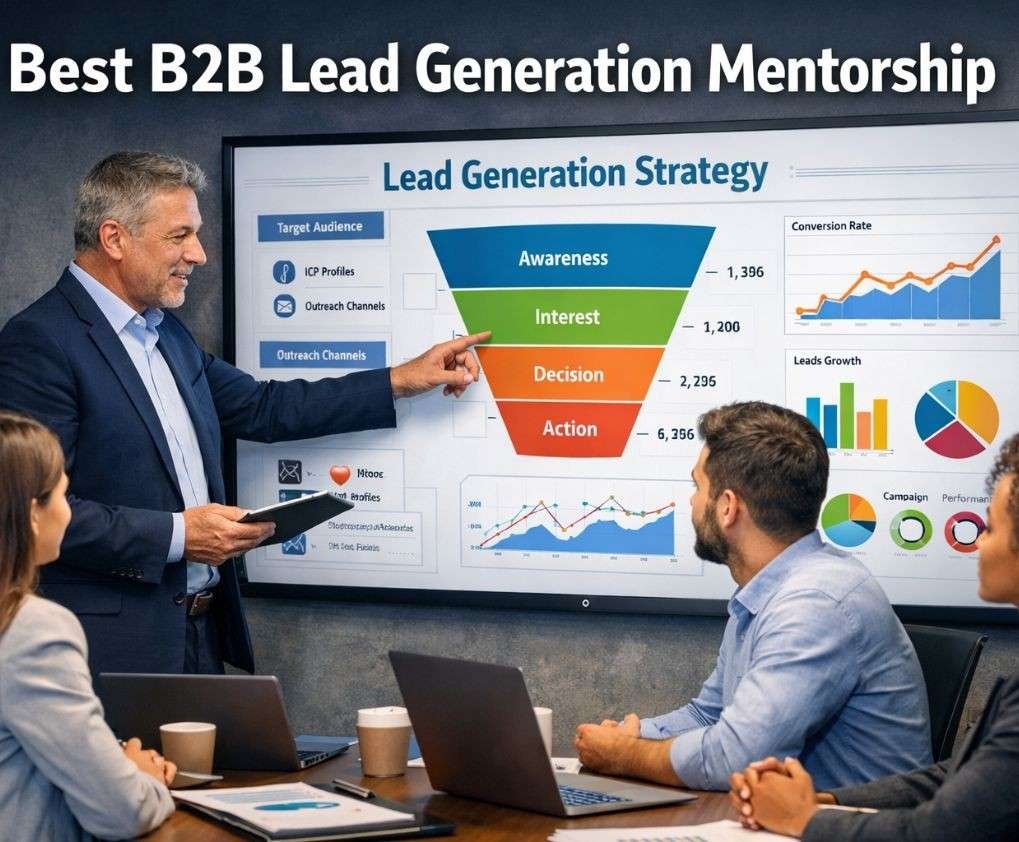
Generating high-quality B2B leads has become one of the most critical challenges for growing businesses. With increased competition, longer sales cycles, and more informed buyers, relying only on tools or automation is no longer enough. This is where B2B lead generation mentorship plays a vital role. The right mentorship helps businesses build structured, predictable, and scalable lead generation systems that deliver consistent results over time.
This guide explains what B2B lead generation mentorship is, why it matters, and how to choose the best mentorship program for your business goals.
What Is B2B Lead Generation Mentorship?
B2B lead generation mentorship is a structured guidance program led by experienced industry professionals who specialize in acquiring, nurturing, and converting business-to-business leads. Unlike generic online courses, mentorship focuses on practical implementation, personalized strategies, and real-world problem solving.
A mentor works closely with business owners, sales teams, marketers, or consultants to refine targeting, optimize outreach, improve conversion rates, and scale lead acquisition channels effectively.
Why B2B Lead Generation Mentorship Is Important
Many businesses struggle with inconsistent leads, low conversion rates, or high acquisition costs. A strong mentorship program helps address these challenges by providing expert direction and proven frameworks.
Key benefits include:
- Clear understanding of ideal customer profiles (ICPs)
- Better alignment between sales and marketing
- Reduced trial-and-error costs
- Faster growth with scalable systems
- Improved lead quality and conversion rates
Instead of guessing what works, businesses learn from strategies already tested in real markets.
Core Areas Covered in B2B Lead Generation Mentorship
The best B2B lead generation mentorship programs cover multiple areas essential for sustainable growth.
1. Target Audience & Buyer Persona Development
Mentorship helps businesses define who their ideal clients are, including industry, company size, decision-makers, and pain points. This clarity ensures that marketing efforts attract qualified leads rather than random inquiries.
2. Lead Generation Channels
A good mentor guides businesses in selecting the most effective channels based on their niche. These may include:
- LinkedIn outreach and prospecting
- Cold email campaigns
- Content marketing and SEO
- Paid advertising (Google Ads, LinkedIn Ads)
- Webinars and virtual events
- Referral and partnership strategies
Mentorship ensures these channels work together instead of operating in isolation.
3. Sales Funnel Optimization
Generating leads is only half the journey. Mentorship focuses on optimizing each stage of the funnel, from first contact to final conversion. This includes improving landing pages, email sequences, follow-ups, and call strategies.
4. Lead Qualification & Nurturing
Not all leads are ready to buy immediately. Mentors teach how to score, segment, and nurture leads using CRM systems, automated workflows, and value-driven communication.
5. Metrics, Analytics & Scaling
Mentorship emphasizes tracking key performance indicators (KPIs) such as cost per lead, conversion rate, response rate, and lifetime value. Once a strategy proves successful, mentors guide businesses on how to scale without losing efficiency.
Who Should Invest in B2B Lead Generation Mentorship?
B2B lead generation mentorship is valuable for:
- Startup founders seeking early traction
- B2B consultants and agencies
- SaaS companies aiming for predictable growth
- Sales and marketing professionals
- Coaches and service-based businesses
- Enterprises launching new products or markets
If your business relies on consistent client acquisition, mentorship can significantly shorten the learning curve.
Characteristics of the Best B2B Lead Generation Mentorship
Not all mentorship programs deliver the same results. The best B2B lead generation mentorship includes the following qualities:
Proven Industry Experience
Look for mentors who have generated leads successfully in real B2B environments, not just theoretical knowledge.
Personalized Strategy
Effective mentorship adapts to your business model, market, and budget rather than offering a one-size-fits-all approach.
Hands-On Guidance
The best programs include live sessions, audits, feedback, and real-time problem solving.
Actionable Frameworks
Good mentorship focuses on implementation, providing scripts, templates, workflows, and processes you can apply immediately.
Long-Term Skill Development
Instead of quick hacks, top mentors teach sustainable systems that continue working even after the program ends.
How B2B Lead Generation Mentorship Drives Long-Term Growth
Mentorship doesn’t just increase leads—it improves business confidence and decision-making. With expert guidance, businesses avoid common mistakes like targeting the wrong audience, overspending on ads, or relying too heavily on one channel.
Over time, mentorship helps create:
- Predictable monthly lead flow
- Stronger sales conversations
- Better brand positioning
- Increased client retention
- Higher revenue stability
This foundation allows businesses to focus on innovation, customer experience, and expansion.
How to Choose the Right B2B Lead Generation Mentor
When selecting a mentorship program, consider:
- Industry relevance and past success stories
- Program structure and duration
- Level of personal involvement
- Availability of tools and resources
- Reviews or testimonials from past participants
Choosing the right mentor is an investment, so clarity on expectations and outcomes is essential.
Final Thoughts
The best B2B lead generation mentorship combines strategy, execution, and accountability. In a competitive B2B environment, mentorship provides the guidance needed to attract high-quality leads, convert them efficiently, and scale growth sustainably.
Rather than relying on guesswork or fragmented tactics, mentorship empowers businesses with proven systems and expert insights. For companies serious about long-term success, investing in B2B lead generation mentorship is not an expense—it’s a strategic growth decision.