In today’s competitive digital marketplace, businesses need more than just ads or cold outreach to succeed. Buyers are more informed, take longer to decide, and interact with brands across multiple channels before making a purchase. This is where demand generation plays a key role.
Demand generation is a long-term marketing approach focused on creating awareness, interest, and trust around your brand and offerings. Instead of only pushing for immediate sales, it builds relationships with potential customers and guides them through the buying journey. In this blog, we’ll explain what demand generation is, how it works, and how it helps businesses grow sustainably.
What Is Demand Generation?
Demand generation is a marketing strategy designed to create and nurture interest in a product or service over time. It focuses on educating your audience, solving their problems, and positioning your brand as a trusted solution.
Unlike lead generation, which aims to collect contact details quickly, demand generation focuses on building awareness and credibility before a buyer is ready to convert. The goal is to ensure that when a customer is ready to buy, your brand is already top of mind.
Demand generation includes activities such as content marketing, SEO, social media marketing, email nurturing, webinars, paid campaigns, and brand storytelling.
How Demand Generation Works
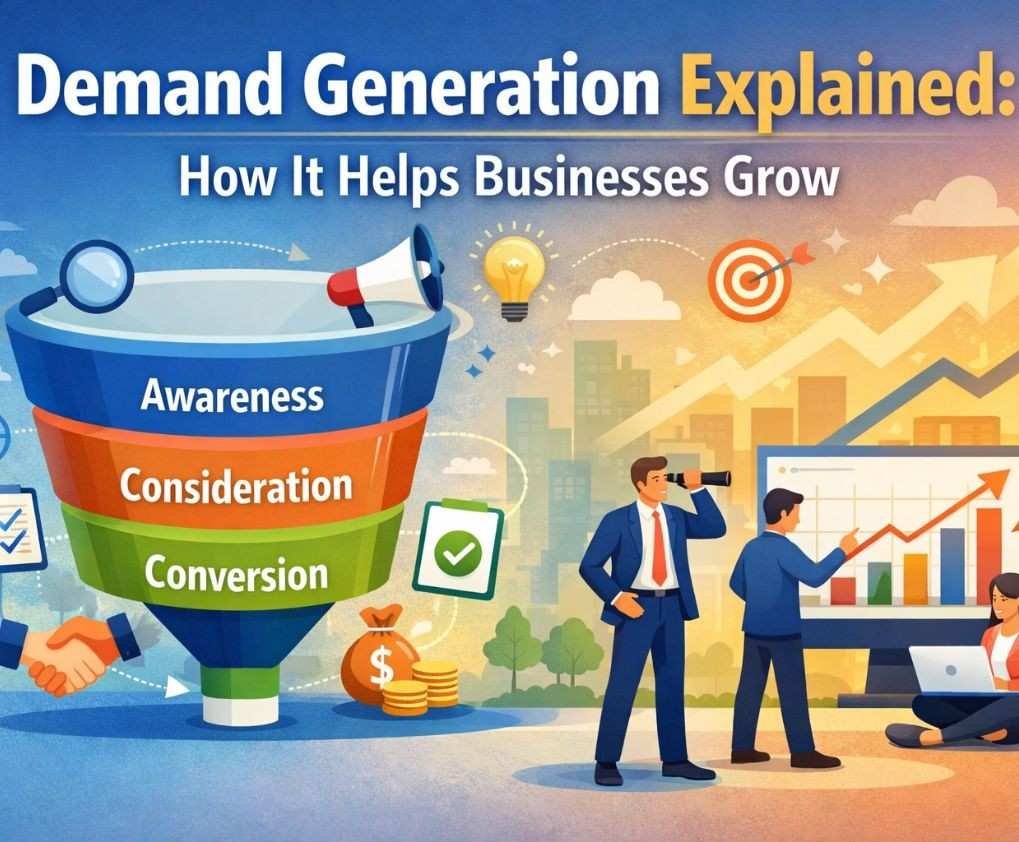
Demand generation works across the entire customer journey, from awareness to conversion and beyond. It typically includes three main stages:
- Awareness
At this stage, businesses introduce their brand to potential customers. Content such as blog posts, videos, social media updates, and educational guides help people understand their problems and possible solutions. - Consideration
Once prospects are aware, demand generation nurtures their interest. Case studies, whitepapers, email campaigns, and webinars help them compare options and see the value of your solution. - Decision
In the final stage, prospects are ready to make a purchase. Product demos, testimonials, free trials, and targeted offers help convert interest into action.
This structured approach ensures that businesses engage customers at the right time with the right message.
Demand Generation vs Lead Generation
While the two terms are often used together, they serve different purposes.
- Demand generation focuses on building awareness, trust, and long-term interest.
- Lead generation focuses on capturing contact details and driving immediate conversions.
Demand generation creates a strong foundation that makes lead generation more effective. When prospects already trust your brand, they are more likely to convert into high-quality leads.
Key Components of Demand Generation
Several core elements work together to make demand generation successful:
- Content Marketing
Educational blogs, videos, guides, and resources help answer customer questions and position your brand as an authority. - Search Engine Optimization (SEO)
SEO ensures your content reaches people who are actively searching for solutions related to your business. - Email Marketing
Email nurturing keeps your brand in front of prospects and guides them through the buying process. - Social Media Marketing
Social platforms help build visibility, engagement, and brand credibility. - Marketing Automation and Analytics
Tools help track engagement, personalize campaigns, and measure performance.
How Demand Generation Helps Businesses Grow
Demand generation offers several long-term benefits that directly support business growth.
First, it builds brand awareness. By consistently sharing valuable content, businesses become recognizable and trusted in their industry.
Second, it improves lead quality. Educated prospects are more likely to convert, reducing wasted effort on unqualified leads.
Third, demand generation shortens the sales cycle. When buyers already understand your value, sales teams can focus on closing rather than educating from scratch.
Fourth, it aligns sales and marketing teams. Both teams work toward the same goal—guiding prospects smoothly from awareness to purchase.
Finally, demand generation supports sustainable growth. Instead of relying on short-term tactics, businesses build long-lasting customer relationships that drive repeat sales and referrals.
Who Should Use Demand Generation?
Demand generation is especially valuable for:
- B2B companies with longer sales cycles
- SaaS and technology businesses
- Service-based businesses
- Companies looking for scalable, long-term growth
- Brands entering competitive markets
However, any business that wants to build trust and authority can benefit from a demand generation strategy.
Conclusion
Demand generation is more than just a marketing trend—it’s a strategic approach to building lasting business growth. By focusing on education, awareness, and relationship-building, demand generation helps businesses attract the right audience, nurture trust, and convert prospects into loyal customers.
Instead of chasing quick wins, demand generation creates a steady pipeline of engaged buyers who are ready to choose your brand when the time is right. For businesses looking to grow in a sustainable and meaningful way, demand generation is an essential part of modern marketing.