Diabetes is one of the fastest-growing chronic health conditions worldwide. Millions of people are living with undiagnosed pre-diabetes, a silent condition where blood sugar levels are higher than normal but not yet in the diabetes range. Without early intervention, many of these individuals will develop type 2 diabetes, increasing their risk of heart disease, kidney failure, nerve damage, and vision problems.
But here’s the game-changing news: AI diabetes prediction is transforming how we detect diabetes — earlier, faster, and more accurately than ever before.
Instead of waiting for symptoms or relying only on blood tests, AI can now analyze patterns in everyday health data to predict diabetes risk long before traditional diagnosis methods.
Let’s explore how this trending health technology is reshaping preventive care.
Why Early Detection of Diabetes Is So Important
Pre-diabetes often has no clear symptoms. Many people only discover they have diabetes after complications begin. Traditional screening methods include:
- Fasting blood glucose tests
- HbA1c blood tests
- Oral glucose tolerance tests
While effective, these require lab visits, medical access, and active testing. That means many at-risk individuals never get screened — especially in low-resource areas.
AI changes this by turning routine health data into powerful predictive insights.
How AI Predicts Diabetes Before It Happens
1️⃣ AI + ECG Technology: A Surprising Breakthrough
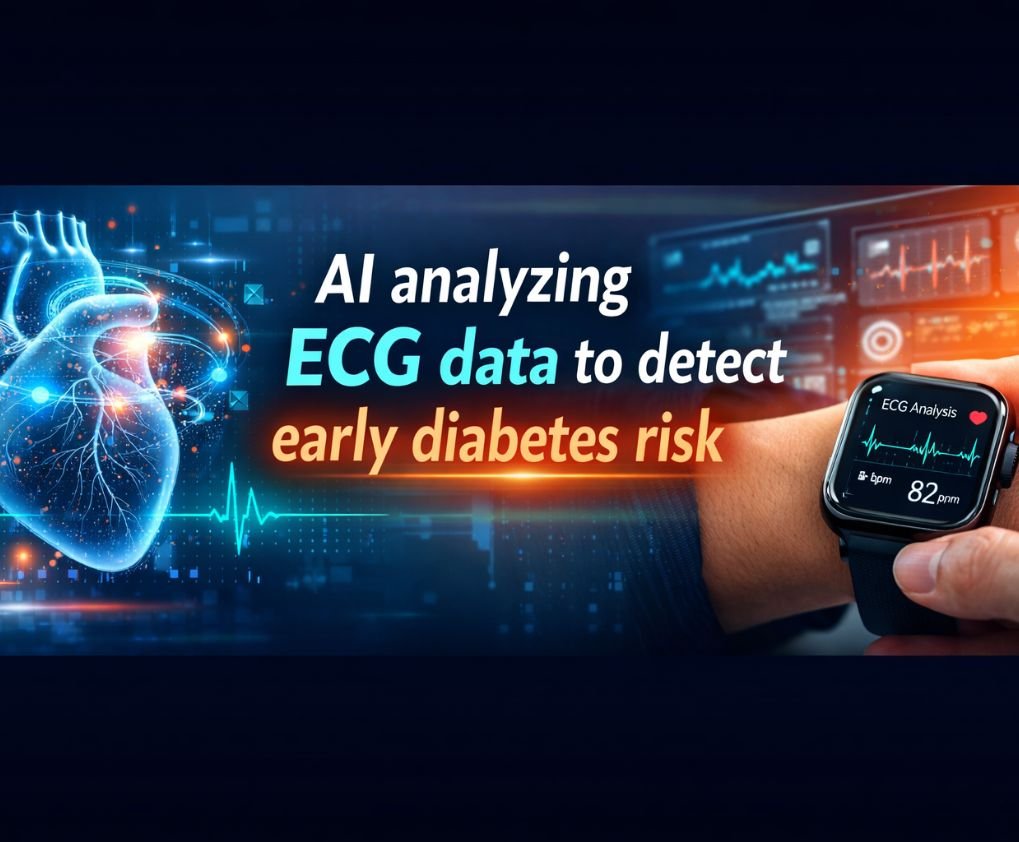
One of the most exciting innovations is AI analysis of electrocardiograms (ECGs) — typically used to check heart health.
Researchers discovered that subtle electrical patterns in the heart can reflect metabolic changes linked to diabetes. AI algorithms trained on thousands of ECG readings can now:
✔ Detect pre-diabetes
✔ Identify high-risk individuals
✔ Work even without blood test data
Even more impressive? Some AI systems can analyze single-lead ECG data from wearable devices, meaning your smartwatch could help flag diabetes risk in the future.
This is trending because it turns a common heart test into a powerful metabolic screening tool.
2️⃣ Wearables & Continuous Monitoring
Smartwatches and fitness trackers already measure:
- Heart rate
- Activity levels
- Sleep patterns
- Heart rhythm (ECG in some devices)
AI models combine this data with lifestyle patterns to detect early warning signs of glucose imbalance.
Imagine receiving an alert saying:
“Your health data suggests a higher risk of pre-diabetes. Consider consulting your doctor.”
That’s the future of preventive healthcare — proactive instead of reactive.
3️⃣ Predicting Risk 5–10 Years in Advance
Some AI research models have shown the ability to predict type 2 diabetes up to a decade before diagnosis.
By analyzing patterns invisible to the human eye, AI can detect:
- Subtle cardiovascular changes
- Early metabolic shifts
- Risk correlations between body systems
This gives healthcare providers valuable time to recommend lifestyle changes like:
- Weight management
- Improved diet
- Increased physical activity
- Early medication if necessary
Early action can prevent or delay diabetes entirely.
Why This Trend Matters in 2026 and Beyond
AI in healthcare is booming because it solves real-world problems:
🔹 Non-Invasive Screening
No needles required — ECG and wearable data can be enough.
🔹 Faster Mass Screening
Large populations can be screened quickly using digital tools.
🔹 Affordable & Scalable
AI tools can reach rural and underserved communities.
🔹 Personalized Risk Scores
AI tailors predictions based on individual data rather than averages.
🔹 Preventive Healthcare Shift
The focus moves from treatment to prevention.
This aligns perfectly with the global movement toward predictive and personalized medicine.
Important Points to Remember
✔ AI does not replace doctors — it supports clinical decision-making.
✔ Blood tests are still important for official diagnosis.
✔ AI tools require proper validation to ensure accuracy across diverse populations.
✔ Data privacy and ethical use of health data remain critical.
✔ Early detection only works if followed by lifestyle or medical intervention.
Frequently Asked Questions (FAQs)
Can AI really detect diabetes without blood tests?
AI cannot officially diagnose diabetes without blood tests yet. However, it can predict risk and detect early warning signs using ECG and wearable data. Blood tests are still required for confirmation.
Is AI diabetes screening accurate?
Many research models show high accuracy rates in controlled studies. However, accuracy depends on the population studied and the quality of data used.
Can my smartwatch detect diabetes?
Most consumer smartwatches cannot directly diagnose diabetes. But future AI updates may use heart rhythm and activity data to assess risk levels.
Who benefits most from AI-based screening?
People with:
- Family history of diabetes
- Obesity or metabolic syndrome
- Sedentary lifestyles
- Limited access to healthcare
Will AI replace traditional diabetes testing?
No. AI is designed to enhance early detection and risk assessment, not replace clinical testing.
The Future of Diabetes Prevention
AI is pushing healthcare into a new era where diseases like diabetes can be identified before symptoms appear. By analyzing patterns in heart signals, wearable data, and lifestyle metrics, AI empowers both patients and doctors to take action sooner.
The real revolution isn’t just better technology — it’s the shift toward predictive prevention.
If widely adopted, AI-powered early detection could:
- Reduce global diabetes rates
- Lower healthcare costs
- Improve quality of life
- Prevent long-term complications
In a world where chronic diseases are rising rapidly, AI offers something powerful: a chance to intervene before it’s too late.