
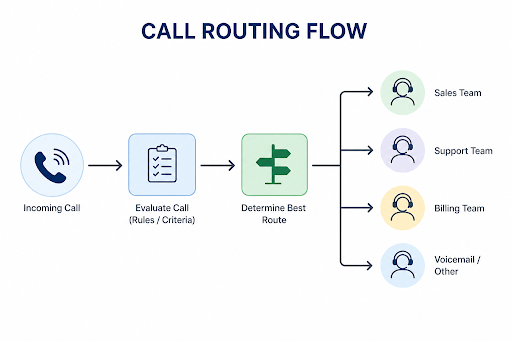
There’s a moment every support team recognizes. Calls are coming in, agents are available, and yet… customers are still waiting longer than they should. Not because the team is slow, but because the calls aren’t reaching the right person at the right time.
I’ve seen this play out in both small support teams and large enterprise setups. The issue usually isn’t volume it’s direction. That’s where call routing software quietly changes the entire flow.
The Difference Between Picking Calls and Handling Them Well
Most teams assume answering calls quickly equals good service. It doesn’t. What actually matters is whether the caller gets to someone who can solve the problem without bouncing them around.
A growing SaaS company I worked with had a decent support team. Response times looked fine on paper. Still, customers kept complaining about “being transferred too much.”
Turns out, their system pushed calls to the next available agent no context, no prioritization. Billing queries landed with tech support. Sales inquiries ended up with onboarding teams.
Once they introduced smarter call routing software rules, things shifted fast. Calls started going to the right departments based on intent, not just availability. Transfer rates dropped. So did frustration—on both sides.
How Call Routing Software Actually Improves Flow
It’s not about fancy dashboards or complex setups. The real value shows up in everyday operations.
- Calls are directed based on skills, not randomness
- Repeat callers can be recognized and prioritized
- High-value leads don’t sit in the same queue as general queries
- Peak hours don’t feel chaotic because the load is distributed better
In short, the system starts thinking a bit ahead instead of reacting late.
One B2B service provider I spoke with described it well:
“Earlier, our agents were busy. Now, they’re productive.”
There’s a difference.
When Blended Environments Get Complicated
Things get even more interesting in setups using blended call center solutions where teams handle both inbound and outbound calls.
Without proper routing, agents often get stuck switching contexts too quickly. One moment they’re closing a sales call, the next they’re handling a complaint. That kind of jump affects performance more than most managers expect.
With better routing in place, businesses can control how calls are assigned:
- Inbound priority during high-traffic hours
- Outbound campaigns during quieter periods
- Specific agents handling specific call types
This balance keeps the workflow steady instead of overwhelming.
A Quick Reality Check: It’s Not Just for Large Enterprises
There’s a common belief that routing systems are only useful at scale. Not really.
Smaller teams actually feel the impact faster because every missed or misrouted call hurts more. When you have 5–10 agents, even a small inefficiency becomes obvious by the end of the day.
I’ve seen startups fix customer experience issues simply by setting up basic routing logic no major overhaul, just smarter call distribution.
Practical Things That Make a Difference
If you’re considering improving your call flow, a few things are worth paying attention to:
- Don’t overcomplicate the routing logic in the beginning
- Start with clear categories (sales, support, billing, etc.)
- Review call data weekly—it tells you what’s not working
- Give agents some control too; rigid systems can backfire
And most importantly, listen to your team. They usually know where the calls are going wrong.
Where It Starts to Feel Different
Once routing starts working properly, you notice small changes first.
Agents sound less rushed. Customers repeat themselves less. Managers stop firefighting and start planning.
It’s not dramatic. It’s just… smoother.
And honestly, that’s what most call operations are missing not more tools, just better direction.
For More Info Visit:- digiviveo.com