After surgery, injury, or a neurological event, many dogs and cats benefit from structured to regain strength, mobility, and confidence. Rather than relying on rest alone, rehab and fitness for pets use targeted techniques to support healing and reduce the risk of long‑term complications. As veterinary medicine advances, pet rehab therapy has become a core component of comprehensive treatment plans.
Goals of Pet Rehabilitation
Pet rehabilitation aims to restore function as fully as possible while minimizing pain and protecting healing tissues. Specific goals may include:
- Improving joint range of motion and flexibility.
- Rebuilding muscle strength and endurance.
- Enhancing balance and coordination.
- Supporting safe mobility and independence in daily life.
These objectives are tailored to each animal’s condition, whether they are recovering from orthopedic surgery, spinal cord injury, or chronic joint disease.
Common Techniques Used in Pet Rehab Therapy
Rehab and fitness for pets draw on a variety of methods, chosen based on the stage of healing and the pet’s tolerance.
Therapeutic Exercises
Canine rehab exercises and similar programs for cats often include:
- Passive range-of-motion movements to keep joints flexible early in recovery.
- Assisted standing and weight-shifting drills to encourage controlled loading.
- Strengthening tasks such as sit-to-stand repetitions, controlled leash walks, and gentle inclines.
These activities are introduced gradually to prevent overexertion.
Hydrotherapy and Treadmill Work
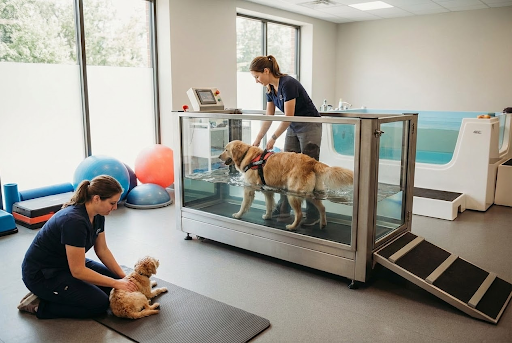
Underwater treadmills are frequently used in pet rehab therapy because water buoyancy reduces joint stress while still allowing effective muscle work. Swimming or walking in water can:
- Improve cardiovascular fitness.
- Increase joint motion with less pain.
- Help pets practice coordinated stepping patterns.
Land treadmills or controlled ground exercises may be added as the animal’s strength improves.
Manual Therapies and Modalities
Some rehabilitation programs incorporate manual therapies and physical modalities, such as:
- Massage to reduce muscle tension and promote circulation.
- Stretching to relieve tight muscles and tendons.
- Heat or cold therapy to manage pain and inflammation.
- Therapeutic laser or electrical stimulation in selected cases.
These tools support comfort and tissue healing when used alongside exercise-based approaches.
Designing an Individualized Rehab Plan
Effective pet rehab therapy begins with a detailed assessment of the animal’s current abilities, pain level, and medical history. The rehabilitation team then:
- Sets short- and long-term goals in collaboration with the owner and primary veterinarian.
- Chooses appropriate canine rehab exercises or feline-specific adaptations.
- Adjusts intensity and frequency based on progress and any setbacks.
Regular re-evaluation helps ensure that the program remains challenging but safe and that it evolves as the pet improves.
The Owner’s Role in Successful Rehabilitation
Owner participation is vital to the success of rehab and fitness for pets. While professional sessions provide guidance and advanced techniques, much of the work happens at home. Owners are often taught:
- How to perform basic exercises and stretches correctly.
- Ways to create a safe environment, such as using non-slip mats and ramps.
- Strategies for encouraging activity without overdoing it.
Consistent home care complements in‑clinic sessions and maintains momentum between visits.
Long-Term Benefits Beyond Recovery
Many pets continue some form of pet rehab therapy even after they reach initial recovery goals. Ongoing conditioning can:
- Help manage chronic conditions like arthritis.
- Reduce the risk of re-injury by improving strength and coordination.
- Support weight management through controlled activity.
By viewing rehabilitation as part of lifelong wellness, owners can enhance their animals’ comfort and quality of life well into the future.
Conclusion: Active Healing for Better Outcomes
Pet rehab therapy transforms recovery from a passive process into an active, guided journey back to function. Through individualized canine rehab exercises and a broader focus on rehab and fitness for pets, rehabilitation helps animals regain mobility, manage pain, and return to everyday activities more quickly and safely. When integrated into a comprehensive treatment plan, it becomes a powerful tool for improving long‑term outcomes after injury or surgery.