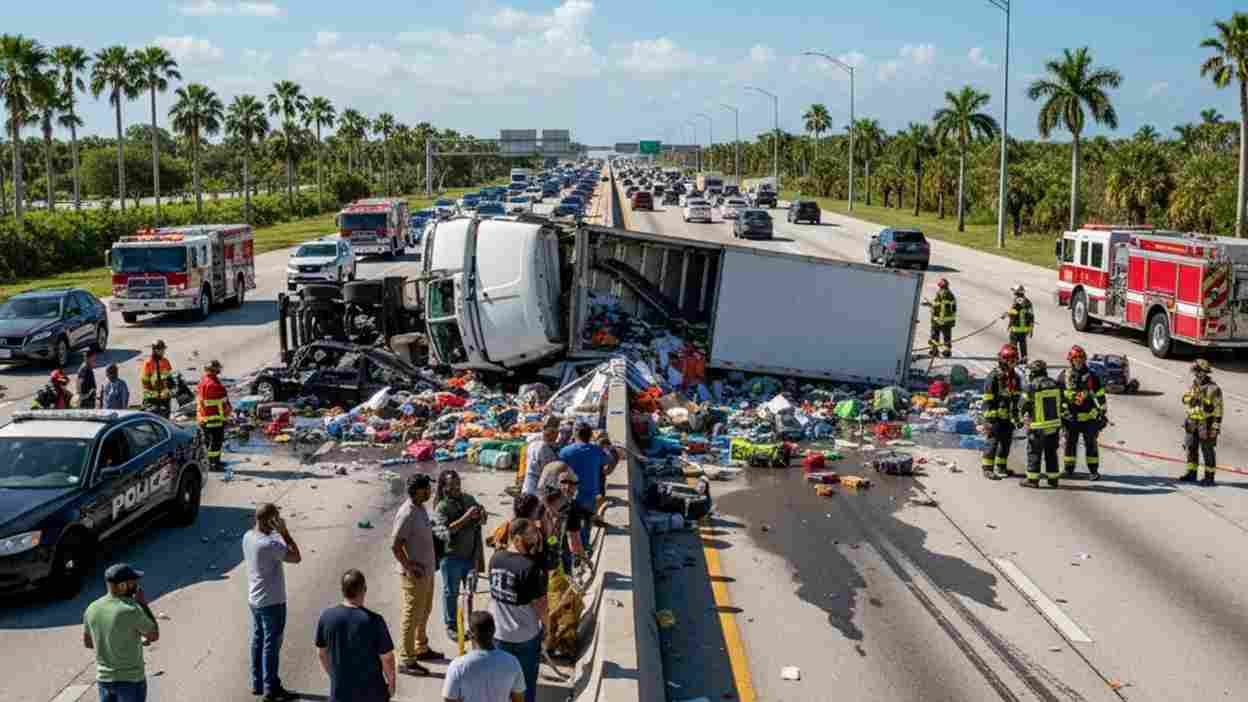
Every year, Florida drivers face risks on the road that few anticipate until it’s too late. While many roads offer scenic drives, a handful consistently report higher accident rates, injuries, and fatalities.
For those driving here, knowing which highways carry the greatest dangers isn’t just useful—it can save lives.
This detailed look at the top 7 most dangerous roads in Florida in 2025 will help you understand why these roads are so risky and how to stay safe every time you travel them.
We’ve researched data from federal and state sources, accident reports, and safety experts so you can drive with awareness and confidence.
1. Interstate 4 (I-4)
I-4 traverses Florida from Tampa through Orlando to Daytona Beach and consistently ranks as the deadliest interstate in the country. Heavy tourist traffic, busy theme park exits, rapid lane changes, and frequent construction zones combine to create hazardous conditions. Drivers often become distracted or aggressive, making collisions common.
2. U.S. Route 1 (US-1)
Stretching over 545 miles along Florida’s Atlantic coast, US-1 passes through Miami, Fort Lauderdale, and West Palm Beach. It is notorious for frequent pedestrian accidents, DUI-related crashes near nightlife areas, and dangerous merging highways. Heavy tourist and local traffic intensify risk factors.
3. Interstate 95 (I-95)
As Florida’s primary north-south artery, I-95 handles enormous vehicle volume, including many commercial trucks. The stretch between Broward and Palm Beach counties stands out for frequent high-speed crashes, often involving multiple vehicles and serious injuries due to heavy traffic and aggressive driving behaviors.
4. State Road 50 (FL-50)
Known for commuter congestion, particularly in Orange County, FL-50 experiences crashes primarily during rush hours. Its mixture of local traffic and commercial vehicles navigating through busy intersections leads to high accident rates.
5. U.S. Route 19
Popular for suburban commutes and commercial traffic, US-19 in Pasco and Pinellas counties reports consistent crash activity. Its multiple lane merges, high traffic volume, and complex interchanges create challenging driving environments.
6. Beach Boulevard (U.S. Route 90) in Jacksonville
Beach Boulevard is a key east-west route for Jacksonville, with a high number of pedestrian accidents and rear-end collisions, especially near shopping districts and residential neighborhoods. Speed variability and heavy bike traffic add to the dangers.
7. 66th Street in Gulfport
Though a shorter stretch, 66th Street in Gulfport shows high accident and fatality rates due to its confusing intersections, frequent pedestrian crossings, and mixed commercial-residential use, making driver attention paramount.
What Contributes To These Roads’ Danger?
Several factors drive high accident rates:
- Congestion mixing tourists, locals, trucks, and pedestrians
- Aggressive or distracted driving behaviors
- Poor road design, including confusing merges and poorly timed signals
- Weather hazards, especially sudden rainstorms affect traction and visibility
- Construction zones that narrow lanes or cause unexpected detours
How Can You Stay Safe?
Understanding these dangers allows you to prepare:
- Drive cautiously and avoid distractions—put your phone away.
- Maintain safe following distances so you can stop safely.
- Adjust speed for traffic flow and weather conditions.
- Use GPS or traffic apps to avoid peak congestion or accidents.
- Watch carefully for pedestrians and cyclists, especially near urban areas.
If you are involved in a crash on these or any Florida roads, consult a Florida road accident lawyer promptly. Expert legal guidance can help ensure your rights are protected and that you pursue fair compensation if others are at fault.
Conclusion:
Florida’s diverse landscape offers great roads but also deadly ones. Knowing the top 7 most dangerous roads in Florida in 2025—their characteristics and risks—helps you drive with greater caution and confidence. Prioritize safety, stay alert, and keep legal resources handy to handle accidents if they occur. Your vigilance and knowledge are vital tools in avoiding tragedies on Florida’s busiest and most hazardous routes.