Studying in Ireland attracts students from across the world due to its recognised universities and career opportunities. Before applying, it is important to understand the Ireland’s student visa requirements to avoid delays or rejection. The visa process focuses on eligibility, documentation, and financial readiness. Each requirement must be supported by accurate proof to ensure a smooth, timely application process. Understanding who needs a visa, the key requirements, and the steps helps to apply for a visa successfully.
Who Needs an Ireland’s Student Visa?
Students from outside the European Economic Area must apply for a visa to study in Ireland. A short-stay ‘C’ visa applies to courses lasting less than three months. A long-stay ‘D’ visa applies to full-time undergraduate and postgraduate programmes. Most international students apply for the ‘D’ visa, as it is required for degree-level education at recognised institutions.
Core Eligibility Requirements
Understanding the Ireland study visa requirements starts with meeting the eligibility criteria defined by the Irish authorities. Each requirement must be supported with valid documentation.
- Offer from Recognised Institution: Applicants must hold an offer letter from an institution listed on the Interim List of Eligible Programmes (ILEP).
- Appropriate Visa Type: A long-stay “D” study visa is required for full-time programmes.
- Academic Qualification: Applicants must meet the academic requirements of the chosen course.
- English Language Proficiency: Proof through tests such as IELTS, TOEFL, or accepted equivalents is required.
- Financial Capacity: Students must show sufficient funds to cover tuition fees and living costs. A minimum of €10,000 per year is generally expected for living expenses.
- Health Insurance: Valid private medical insurance must be arranged before travelling.
- Valid Identification Documents: A valid passport, recent passport-sized photographs, and a signed application summary are required.
- Statement of Purpose: A clear SOP must explain study plans and reasons for choosing Ireland.
- Proof of Home Country Ties: Evidence such as family or employment commitments may be required to show intent to return.
Meeting these conditions helps ensure the application is complete.
Mandatory Documents for Application
Submitting accurate documents supports the visa application. Each document serves a specific purpose.
- Academic Records: Certificates and transcripts relevant to the selected course.
- English Language Proof: Test score reports as required by the institution.
- Statement of Purpose: A written explanation of academic goals and study plans.
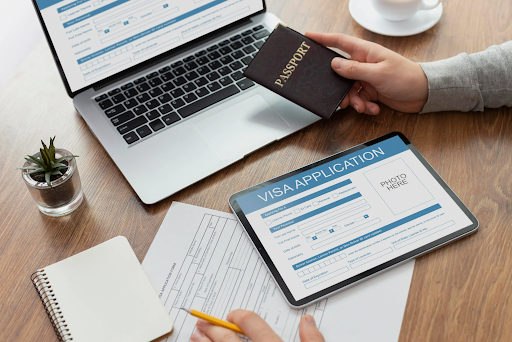
- Visa Application Form and Fee: The application must be completed through the AVATS system with the applicable fee paid.
Careful preparation reduces the chances of delays.
Application Process Step by Step
The visa application process follows a defined sequence. Completing each step correctly helps avoid errors.
- Online Application: Complete the visa application through the official Irish system with accurate details.
- Document Submission: Gather and submit required documents, including academic records and financial proof.
- Visa Fee Payment: Pay the applicable visa fee during the process.
- Appointment or Submission: Follow instructions to submit documents through the relevant centre or authority.
- Interview Requirement: Some applicants may be asked to attend an interview for verification.
- Processing and Tracking: Applications are processed, and status can be tracked through the official system.
Following these steps ensures consistency.
Processing Time and When to Apply
Ireland’s study visa requirements processing times vary depending on application volume and the time of year. In most cases, decisions take between 4 to 8 weeks. Applicants should apply at least two to three months before their course start date. Early submission helps manage delays, especially during peak admission periods, and allows enough time to respond to any additional document requests.
Common Reasons for Visa Refusal
Understanding common issues helps applicants avoid mistakes. The following factors often affect decisions:
- Incomplete Documentation: Missing or incorrect documents may lead to rejection.
- Insufficient Funds: Failure to demonstrate required financial support is a common issue.
- Unclear Study Intent: A weak or inconsistent SOP may raise concerns.
- Application Inconsistencies: Differences across documents can affect credibility.
Addressing these factors improves application quality.
Practical Tips to Improve Approval Chances
Applicants should review all Ireland’s student visa requirements carefully before submission. The following steps can help strengthen the application:
- Document Accuracy: Ensure all documents are complete and consistent.
- Financial Clarity: Clearly show the source and availability of funds.
- Clear Intent: Present a logical reason for selecting the course and institution.
- Early Submission: Apply in advance to avoid delays.
These steps support a well-prepared application.
Final Pre-Submission Checklist
Before submission, review the following points based on the Ireland’s study visa requirements:
- Offer Confirmation: Admission letter from an Irish institution
- Fee Payment Proof: Receipt confirming tuition payment
- Valid Passport: Passport covering the duration of study
- Financial Evidence: Proof of sufficient funds
- Academic and Language Proof: Required certificates and test scores
- Completed Application: Visa form submission and fee payment
A final review helps reduce errors.
Conclusion
Applying for a student visa in Ireland requires careful preparation and attention to detail. Each requirement must be supported with accurate documentation. Understanding the process helps applicants avoid common mistakes. A clear and organised application improves the chances of approval and supports a smooth transition to studying in Ireland.
For more information, visit: https://digiviveo.com