Not all homes are created equal. A production home follows a builder’s standard floor plan with limited modifications. A custom home, by contrast, is designed from a blank page around the people who will live in it. Understanding what separates thoughtful home architecture design from off-the-shelf construction helps buyers make smarter decisions about one of the largest investments of their lives.
What Home Architecture Design Actually Involves
Architecture is not just about aesthetics. A well-designed home integrates site orientation, natural light, structural integrity, ventilation, acoustics, and material durability into a single coherent whole. Good timeline design anticipates how a family moves through a space throughout the day — from morning routines to weekend entertaining to quiet evenings at home.
Custom home designs go further by layering in personal requirements: a chef’s kitchen with a dedicated prep area, a mudroom sized for a family with young children, a home office with acoustic isolation, or a primary suite oriented to capture a specific view. These features cannot be added as afterthoughts; they must be baked into the original design.
The Role of Site Analysis
Before a single line is drawn, architects analyze the property. They study the lot’s topography, orientation relative to the sun, prevailing winds, view corridors, neighboring structures, and local zoning setbacks. A home that ignores its site wastes money heating and cooling spaces that receive the wrong light and blocks the very views that justified buying the lot in the first place.
A skilled residential architect turns site constraints into design opportunities — using a sloped lot to create a walk-out lower level, positioning living areas to capture morning light, or screening service areas with landscape so they disappear from the primary view.
Structural Honesty and Material Selection
Custom home designs allow homeowners and architects to choose materials that perform well over decades rather than materials selected to hit a budget target. Exposed timber framing, natural stone, handmade tile, and locally sourced wood add character that mass-produced homes cannot replicate. More importantly, quality materials reduce long-term maintenance costs and improve the home’s resale position.
Structural choices also affect livability. Open-span framing systems remove interior columns and allow flexible layouts. Concrete or insulated concrete form (ICF) construction improves thermal mass and sound isolation. A custom architect selects the structural system that best serves the design intent rather than defaulting to the cheapest option.
Passive Design Strategies
One of the clearest advantages of custom home architecture design is the ability to incorporate passive strategies that reduce energy consumption without sacrificing comfort. South-facing glazing paired with appropriate roof overhangs admits winter sun and blocks summer heat. Cross-ventilation strategies reduce reliance on mechanical cooling. High-performance insulation assemblies reduce heating loads.
These strategies cost little or nothing to implement at the design stage but would be expensive to retrofit later. They are a core reason why custom home designs tend to outperform production homes in energy efficiency over their lifespans.
The Value of Ongoing Architect Involvement
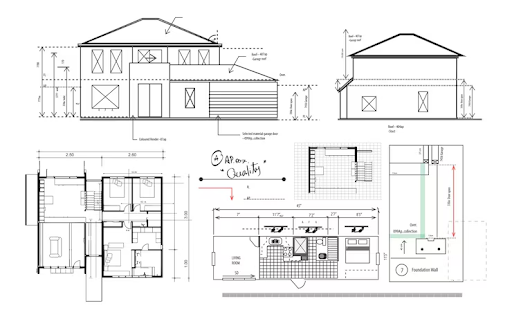
Many homeowners reduce costs by ending the architect’s involvement after the construction documents are complete. This is a false economy. Architects who remain active during construction catch issues before they become problems, confirm that substitutions meet the design intent, and ensure the finished home matches the design.
The difference between a home that looks like the renderings and one that drifts from them during construction almost always comes down to whether the architect stayed engaged through the build.
Choosing the Right Design Partner
The quality of your custom home depends directly on the quality of your design team. Reviewing portfolios, checking references, and understanding a firm’s process before signing are non-negotiable steps. If you are exploring what a dedicated approach to home architecture timeline design looks like in practice, offers a useful starting point for understanding how custom home designs come together from concept through construction.